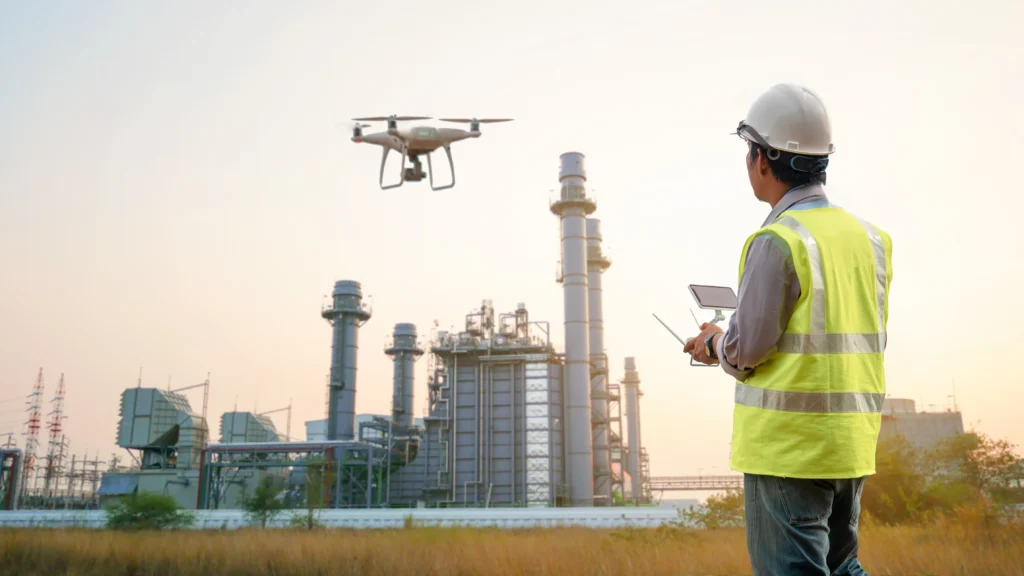

The rapid increase of digital transformation within the direction of industries has reshaped how tasks are monitored, inspected, and controlled. From creation to production, companies are increasingly turning to the clever era that offers precision, velocity, and protection. Among those, drone generation stands proud as one of the maximum impactful improvements revolutionizing cutting-edge-day internet site inspections. In nowadays’s fast-paced business surroundings, usual performance and accuracy are essential. Whether it’s for large-scale advent, infrastructure safety, or business facilities, drones have become a crucial system. Let’s find out how drones are reshaping internet website inspection workflows, improving record accuracy, lowering charges, and improving place of work protection—all through the use of smarter decision-making.
Bridging Technology and Operations for Better Data Insights
Before the creation of the drone generation, internet page inspections were time-consuming, labor-intensive, and susceptible to human errors. Inspectors had to depend upon guide measurements, scaffolding, and scene assessments, which restricted visibility and posed safety dangers. Today, advanced drones ready with excessive-decision cameras, thermal imaging sensors, and LiDAR structures are transforming this procedure. These drones can seize precise aerial imagery and 3-D mapping information, giving challenge managers real-time insights without requiring physical presence at every location.
Interestingly, even industries traditionally unrelated to introduction, at the advent of restaurant procurement solutions answers are adopting drones to show large facilities, take a look at infrastructure, and hold notable requirements. This crossover of generations demonstrates how flexible and scalable drone programs may be in enhancing operational performance and data-driven decision-making.
Real-Time Monitoring and Predictive Maintenance
Drone-based monitoring presents the functionality to discover problems earlier, earlier of after they get worse. By taking non-preventive image records on ordinary devices, universal performance, material conditions, and regional integrity, agencies can shift from reactive to proactive protection. For example, advent corporations can recognize early symptoms and symptoms and symptoms of corrosion, structural weaknesses, or environmental modifications via drone imaging. Predictive algorithms then check the ones’ findings to forecast capacity screw-ups. S.Af America permits renovation crews to intervene early.
This predictive approach isn’t simply beneficial in saving time but additionally minimizes the cost of unplanned downtime. In industries in which delivery chain coordination is critical—along with logistics and meal procurement answers—drones help ensure that every detail and facility stays operational and less expensive.
Streamlining Site Documentation and Quality Assurance
Accurate documentation has continuously been at the heart of successful assignment delivery. Drones have made this manner extra seamless and reliable, with the useful aid of automating the collection of development snapshots, inspection movies, and virtual fashions.
With drones, every flight can generate top-notch evaluations that assist stakeholders in confirming compliance, monitoring milestones, and ensuring that high standards are met. Drone software packages’ structures, moreover, allow integration with Building Information Modeling (BIM), imparting a unified view of the mission’s improvement from the floor up.
These blessings boom even in carrier-oriented sectors, wherein infrastructure plays an essential role. For instance, corporations supplying ff&e procurement services can make use of drone mapping to supervise logistics hubs or warehouse situations, ensuring each fixture, furnishing, and piece of equipment meets specifications in advance of shipping.
Cost Reduction and Improved Safety Standards
Safety and rate performance are two of the most compelling reasons corporations undertake drone inspections. Traditional inspection techniques regularly require employees to gain admission to excessive or volatile regions, increasing the risk of injuries. Drones dispose of an awful lot of this risk by way of providing a secure, far-flung possibility. Moreover, drone inspections considerably reduce operational costs related to scaffolding, crane rentals, or transient website closures. A single drone flight can cover a large area in minutes, accumulating more records than a team could in hours.
Organizations offering FF&E procurement have, furthermore, determined that drones streamline stock assessments and harm assessments, decreasing the need for manual intervention at the same time as retaining specific oversight. These upgrades contribute to more experienced, useful resource control and stronger safety protocols along the path of the board.
Enhancing Structural Inspections and Material Assessments
Beyond the seen statements, drones are actually being protected with superior sensors capable of determining temperature variations, cloth thickness, or even chemical composition. This era is particularly treasured for assessing advent substances and coatings that require extraordinary brilliant manipulation. For example, even when evaluating the overall average performance of metal systems or roofing structures, drones can assist in identifying floor corrosion, free joints, or production defects. They can also take a look for inconsistencies in coatings or protective layers, ensuring durability and compliance with industry requirements.
Materials, together with g90 galvanized sheet—normally finished in creation for its corrosion-resistant properties—may be successfully inspected with the use of the drone era. This method ensures that each sheet meets the desired great benchmarks, lowering waste and ensuring structural integrity throughout the entire project.
The Future of Drone Integration in Smart Infrastructure
As synthetic intelligence (AI) and automation hold to conform, drones are becoming even smarter and self-reliant. Future online website inspections will probably involve fleets of drones capable of self-coordination, AI-pushed analytics, and automatic document generation.
These drones won’t actually collect records—they’ll interpret them. Through AI-based total sample popularity, drones can discover anomalies, forecast safety schedules, and advise corrective movements without human input. Integration with IoT sensors will further beautify those environments, allowing real-time verbal exchange amongst drones and on-net internet web page structures. For fabric inspections, this indicates smarter tracking of essential additives together with G90 galvanized sheet systems, pipelines, or energy structures. These upgrades will create a related, inexperienced, and statistics-centric technique for website management, setting a new benchmark for corporate performance.
Final Thoughts
The drone era has transitioned from being a futuristic idea to a realistic necessity across industries. By presenting a mixture of safety, accuracy, and real-time intelligence, drones are redefining how agencies conduct internet page inspections and control large-scale operations.
From tracking production improvement to overseeing logistics and cloth placement, drones are proving their worth as a strategic investment. They are not the only or least luxurious inspection times and prices; however, they similarly enhance the precision and reliability of each undertaking stage. As industries continue to consist of innovation, the mixture of the drone era will remain a strain in achieving higher productivity and sustainability. The destiny of internet web page inspection is proper right here—and it’s airborne.