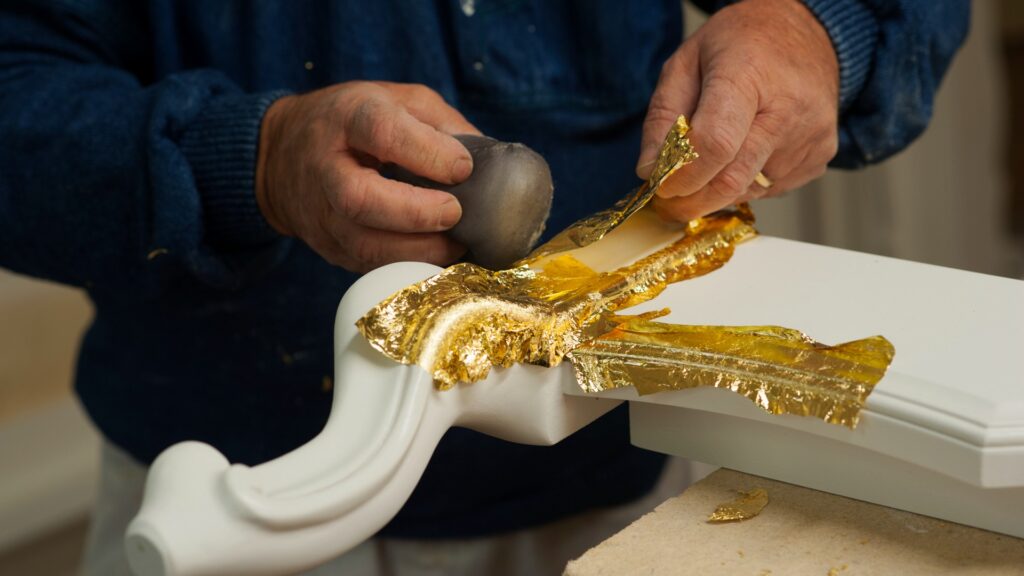

There is a moment of cognitive dissonance that every jewelry lover experiences when they first encounter pure gold. You are presented with a metal that has captivated civilizations for millennia. It is the ultimate store of value, the bedrock of global economies, and the material of crowns. Yet, when you hold it, you notice its defining characteristic: it is incredibly soft.
The irony is startling. The very property that makes gold so desirable—its complete chemical purity—is also the property that makes it functionally fragile. This is the Softness Paradox, and it explains why the gold jewelry standards in the West (14k and 18k) are fundamentally different from those in many parts of Asia and the Middle East, where the purest form is still prized.
Metallurgy 101: The Science of Compromise
To understand the paradox, one must understand the karat system. Gold’s purity is measured on a scale of 24. A piece that is designated 24-karat (24k) is 99.9% pure gold, meaning every atom is a gold atom.
In its pure form, gold is chemically inert. It will never tarnish, rust, or corrode. It will survive floods, fires, and centuries of exposure. However, it is structurally weak. Pure gold has a Vickers hardness rating similar to a fingernail. It is ductile and malleable, which means it can be scratched by simple everyday dust (which contains quartz) and can be bent permanently with minimal pressure. A heavy handbag strap could warp a 24k necklace link; a bump against a doorframe could flatten a 24k ring band.
Jewelers resolved this vulnerability centuries ago by turning to the compromise of alloying. To make gold durable enough for daily wear, it is fused with other metals—primarily copper, silver, zinc, nickel, or palladium.
- 18 Karat (75% Pure): This is the sweet spot often preferred in high-end European jewelry. The gold remains visibly yellow, but the addition of 25% alloy makes it hard enough to withstand normal impacts.
- 14 Karat (58.3% Pure): This is the common standard in North America. By sacrificing 41.7% of the gold content, the resulting alloy is significantly stronger, more resilient to scratches, and cheaper.
The industry is built on this trade-off: The greater the purity, the lower the durability. The greater the durability, the lower the inherent value.
The Cultural Acceptance of Fragility
This technical reality shines a light on the cultural divide in gold preference.
In Western consumer markets, jewelry is primarily viewed as a fashion accessory and a status symbol. It is expected to be worn daily, withstand a rigorous, active lifestyle, and maintain its mirror polish without constant maintenance. Functionality is paramount, leading to the dominance of hard 14k and 18k alloys.
In contrast, in many parts of South Asia and the Middle East, high-carat gold (often 22k or 24k gold jewelry) retains its ancient role as a primary store of wealth—a tangible asset and a form of portable currency.
The cultural preference for 24k gold pieces, particularly for wedding and ceremonial purposes, is rooted in economics. If gold is purchased as an investment against inflation or a means to pass wealth to the next generation, purity is non-negotiable. Scratches, dents, and the need for careful handling are simply accepted as the reality of owning an unalloyed asset. The wearer understands that the item’s intrinsic worth far exceeds its transient aesthetic condition. The piece is respected not for its finish, but for its atomic content.
The Investment Equation
This dual role of gold—as a wearable item and a financial asset—is increasingly relevant to Western buyers today. As global markets fluctuate, more consumers are looking at their jewelry box not as a collection of pretty trinkets, but as a hedge against economic instability.
A gram of 24k gold always equals a gram of pure gold, regardless of who made the chain or how much the design cost. This simplicity makes the resale value (or “scrap value”) predictable and high. The small sacrifice in physical durability is outweighed by the ironclad certainty of its investment value.
Ultimately, choosing a piece of gold is a choice between chemistry and context. Do you want maximum tensile strength for rock climbing, or maximum financial assurance for generational wealth transfer? The answer dictates whether you sacrifice a few percentage points of purity for resilience, or embrace the Softness Paradox for the permanence of pure, unalloyed worth.